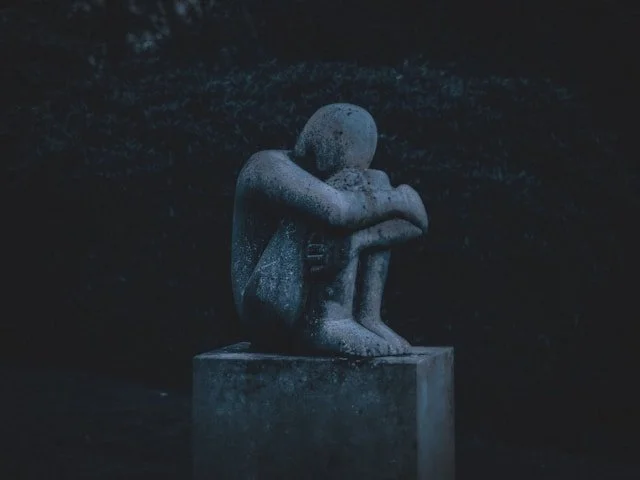



The Lord sees: Trevin Wax shares, “’El Roi’ is a name given to God in the Old Testament, a source of comfort and peace in times of distress. It first falls from the trembling lips of Hagar, the enslaved woman driven into the wilderness after being caught up in the sinful designs of her master and his wife. There she kneels, despondent and despairing, ready for life to come to an end. And there in that desert of sorrow, the Lord sees.”
How to be an elder on Sunday morning: Great advice for elders… and for all of us. David Gunderson says, “Elders provide fatherly leadership, care, and protection for God’s family. Thinking like a father on Sundays should warm your heart, clarify your focus, and make you more alert as you care for God’s family.”
This Week's Recommendations
I will not forget you: Kathryn Butler offers hope in the midst of dementia, “Walking alongside Violet feels like watching death in slow motion. As the quirks and values and personality traits I’ve come to love about her fade away one by one, it’s as if I’m watching Violet herself dwindle and vanish.”
Critical dynamics of criticism: Nick Batzig begins, “It is probably fair to draw the conclusion that there is a universal dislike for personal criticism and correction. Nothing reveals the pride that resides in each one of our hearts so much as being on the receiving end of criticism.”
This Week's Recommendations
Random thoughts on being a dad: Lots of gems from Tim Challies here: “When you sin in front of your children, apologize to your children. While it may feel like you are losing their respect by apologizing, you are actually regaining the respect you surrendered when you sinned against them in the first place.”
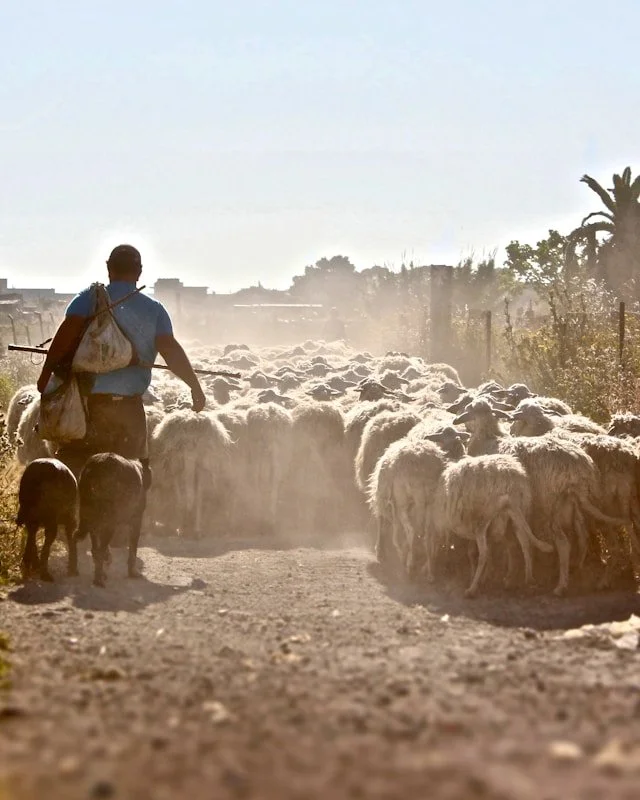
Why my shepherd carries a rod: David Gibson, “It is the shepherd’s primary offensive weapon for protecting the flock from enemies, be they wild animals or human thieves. The instrument itself is about two and a half feet long with a mace-like end into which the heavy pieces of iron are often embedded. It becomes a formidable weapon.”
Things to Not Say About Science
With over 1,000 videos and eight million subscribers, the Jubilee channel on YouTube is a popular platform for debate. Each episode of Jubilee brings people who have disagreements together to try to hash out their opposing opinions. They have episodes about everything from abortion to immigration to the Israel-Palestinian debate. In one of the episodes, two sides debate whether the earth is flat or not. Of the three proponents that the earth is flat, two of the three were Christians. The three opponents were all scientists.
How did we get here?
Christian friends, we’ve got to do better.
This Week's Recommendations
YOLO is the new Epicureanism: Cameron Cole explains why YOLO (and FOMO) are just reheated old ideas. “If this life constitutes the entirety of your existence, then you absolutely must maximize your enjoyment. You must never miss an opportunity for fun and pleasure. If this life is it, then you live with a sense of urgency and fear that if you decline an invitation or miss a good time, then you are wasting your one and only finite life.”
The indiscipline of overwork: Ryan Holiday asks, “Do you want to be the artist who loses their joy for the process, who has strip-mined their soul in such a way that there is nothing left to draw upon? Burn out or fade away—that was the question in Kurt Cobain’s suicide note. How is that even a dilemma?
This Week's Recommendations
Was anyone more alone? Charisse Compton reflects, “I am hardly alone in my loneliness. About one in four adults across the world suffers from a similar hunger. Bankrupt of any long-term solutions, the world suggests increased human interactions to alleviate the suffering. But for all our digital connectedness, the loneliness epidemic persists and grows.”
When I have intrusive thoughts: This is a subject I’ve done a lot of thinking about as well. Lara D’Entremont offers solid counsel, “Through therapy, I learned that fighting against intrusive thoughts is like trying to stop water from gushing out of your faucet with your hands—it will continue to burst through, perhaps even explosively.”
This Week's Recommendations
Every nightmare starts as a dream: Erik Raymond warns us, “No one sets out to bring misery upon themselves. Quite the opposite. They are looking for fulfillment. They want happiness. They are chasing the dream. But remember, every nightmare starts as a dream.”
Pain needs interpreting: Simon Arscott, “My job is to help people interpret their pain. Pain itself – though very unpleasant – doesn’t tell us much. It hurts. It’s uncomfortable. It’s upsetting. We don’t want it. Often, we just want it to go away! But good spiritual care requires interpretation of our pain.”
This Week's Recommendations
All together now: Morgan Housel begins, “The Brooklyn Bridge was the largest structure in the western hemisphere when it opened in 1883. It was almost twice as long as any suspension bridge built before it. People reasonably asked: Is it stable? Will it collapse?”
Four privileges we enjoy as a friend of God: Mike McKinley explains, “we don’t have to come nervously and timidly into God’s presence (Heb. 4:16). We can have a bold and comfortable relationship with God–the VIP who puts all others to shame, because he loves us and has made us his friends and family.”
No further: Cassie Watson with encouragement for weary souls, “The beams of the Son are about to spill over too. We’re in the dawn, awaiting the fullness of the new day. God is orchestrating human history, watching as each day unfolds with all its terror and toil and laughter and love. At just the right moment, he will say, “No further.” He’ll send Jesus back to end this world as we know it and bring in the new creation, where there’ll no longer be “mourning, nor crying, nor pain” (Rev. 21:4).”
Ten diagnostic questions for the potential ideologue: Ken Barbic begins with this question, “Do you present opposing viewpoints in ways that your opponent would agree with?”
Dennis Prager’s troubling defense of pornography: Carl Trueman says, “Many aspects of Prager’s comment are disturbing, not least his failure to address the dark nature of the pornography industry itself. But it is also instructive, because it exposes the superficiality of some of what passes for conservative thought today.”
This Week's Recommendations
Money is now more important to Americans than patriotism, religion, or kids: Peter Weber begins, “A Wall Street Journal/NORC poll released Monday found that "patriotism, religious faith, having children, and other priorities that helped define the national character for generations" have fallen steadily since 1998 and even 2019, the Journal reports.”
Why do I need close friends? Roger Barrier shares, “Now, let me tell you a tragedy. Many people have no intimate friends. They are the loneliest people in the world. There is no one with whom they can open up. That’s why life is so tough.”
The cost of fear: Karen Wade Hayes tells a simple story about baking a cake and fear. “As humans, we can be so impacted by fear that we hide or shrink back when new opportunities arise.”
Five reasons you did not and cannot reinvent yourself: Lots of truth in this post by Brian Rosner. He says, “Human beings are social animals. A growing body of research—some parts surprising, some parts amusing—indicates the extent to which we are profoundly relational creatures and pushes against any notion that anyone is a self-made self.”
An open letter to teens facing doubts about Christianity: Rebecca McLaughlin’s thoughts are winsome and true, “Sometimes you find yourself wondering what is really true. What if modern science has disproved God? What if Christians really are just bigots for not embracing same-sex marriage? What if all religions are equal paths to truth?”
This Week's Recommendations
Are you well-paid? Compare your salary to the average US income: Among the highest paid jobs are Chief executives and nurse anesthetists. Among the lowest paid are childcare workers and lifeguards. Jack Caporal begins, “When you look at your paycheck, are you happy with what you see? Or do you wonder if you should make more?”
Where is your faith? Mary Nolte reflects on faith and the death of her child. “I will never forget standing in the ICU at her bedside, feeling as if I was not really living this nightmare, that I had somehow stumbled into someone else’s reality. This couldn’t be. This shouldn’t be. In that moment, as the doctors and nurses who crowded around her stepped back and looked at us standing there, our faces stricken with unbelief, our hearts pounding with denial, a silent wail forming in the deepest part of our souls, the lead cardiologist said, “Let’s give the parents the last few moments with her,” and the room emptied.”
Overcome your enemies by dying: Peter Krohl asks, “What do you do when people turn against you? When those who reject the Lord Jesus Christ come after you for daring to follow him? When nitpicking and backstabbing are the standard operating procedure in the workplace? When family members use guilt and pressure to manipulate you into doing what they want?”
The crucifixion stories are embarrassing, and that’s a good thing: Robby Lashua explains, “Since the disciples, who were trying to convert people to Christianity, recorded these embarrassing details, we can conclude they were being extremely honest about what happened. They didn’t sugarcoat anything. They gave us the raw details, even though it could damage their cause.”
Should we automate the CEO? Interesting article projecting the impact of job automation in the future. Zachary Crockett explains, “Last August, NetDragon Websoft — a Hong Kong-based online gaming firm with $2.1B in annual revenue — appointed a CEO to helm its flagship subsidiary. The new chief, Tang Yu, was responsible for all of the typical duties of a company figurehead: reviewing high-level analytics, making leadership decisions, assessing risks, and fostering an efficient workplace. She worked 24/7, didn’t sleep, and was compensated $0 per year. But there was a catch: Yu wasn’t a human. She was a virtual robot powered by artificial intelligence.”