In the book of Revelation, Jesus addresses seven first-century churches, commending what is faithful, confronting what is sinful, and calling each church to hear what the Spirit says. Each message closes with a promise “to the one who conquers,” that is, to the one who perseveres in faithful allegiance to Christ.
Pergamum, a church struggling with the enticement of the flesh, receives one of the most intriguing promises. In this stronghold of Satan, they still “hold fast” to Jesus’ name, but they are being lured by the doctrine of cheap grace: trust in Jesus and do as you please! “Repent!” Jesus responds. To those who conquer, Jesus gives two promises: hidden manna and a white stone bearing a new name. “To the one who conquers I will give some of the hidden manna, and I will give him a white stone, with a new name written on the stone that no one knows except the one who receives it” (Rev. 2:17).
Hidden Manna
The interpretation of the hidden manna is connected to God’s provision for Israel in the wilderness. After delivering his people from slavery in Egypt, God gave them manna (bread from heaven) to sustain them on their journey. “And when the dew had gone up, there was on the face of the wilderness a fine, flake-like thing, fine as frost on the ground. When the people of Israel saw it, they said to one another, “What is it?” For they did not know what it was. And Moses said to them, “It is the bread that the LORD has given you to eat.” (Ex. 16: 14-15)
To a church that is being lured by their own flesh and desires, Jesus identifies himself as the true bread from heaven. Israel’s ancestors ate manna in the wilderness, yet they eventually died. Christ, however, gives eternal life to all who feed on him by faith. Jesus explains, “I am the bread of life. Your fathers ate the manna in the wilderness, and they died. This is the bread that comes down from heaven, so that one may eat of it and not die. I am the living bread that came down from heaven. If anyone eats of this bread, he will live forever. And the bread that I will give for the life of the world is my flesh” (Jn 6:48-51).
The hidden manna, then, points at least to the life, fellowship, and final nourishment Christ gives to those who refuse the world’s false pleasures. Pergamum was tempted to participate in pagan feasts and idolatrous practices. Jesus promises something far greater: himself. The believer who denies their flesh and turns from sinful compromise will not be deprived, because Christ is the bread of life who truly satisfies.
The White Stone
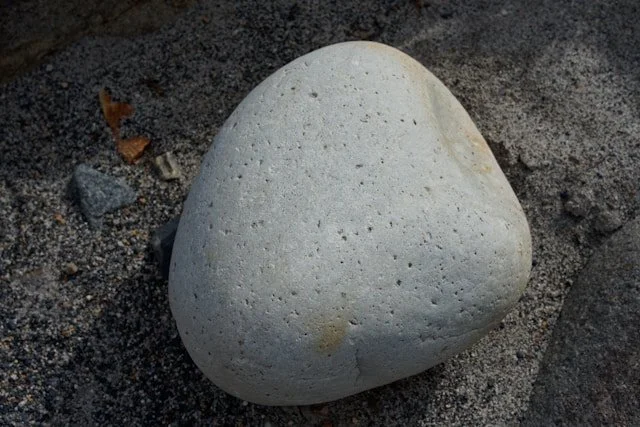
The white stone is more difficult to interpret because Scripture does not explain precisely what the stone represents. Over the millennia, several interpretations have been proposed. Below are the four primary interpretations, each with merit.
One interpretation connects the white stone to the high priest’s breastplate. On the outside of the breastplate were the twelve precious stones etched with the names of Israel’s tribes. The Urim and Thummim were sacred stones placed in the breastpiece for discerning the will of God and for seeking God’s judgment for Israel. “So Aaron shall bear the names of the sons of Israel in the breastpiece of judgment on his heart, when he goes into the Holy Place, to bring them to regular remembrance before the LORD. And in the breastpiece of judgment you shall put the Urim and the Thummim, and they shall be on Aaron’s heart, when he goes in before the LORD. Thus Aaron shall bear the judgment of the people of Israel on his heart before the LORD regularly. (Ex. 28:29–30)
The word Urim means light and could be understood as white (later rabbinic sources conjectured it was a diamond). This interpretation has some appeal because Revelation frequently draws from Old Testament imagery and language. Another strength is that in the Holy Place in the temple there was manna and the Urim, thus connecting the two images. One commentator notes that the priest Phinehas was rewarded with “an everlasting priesthood” for his zeal against similar sins which Balaam seduced Israel (Num. 25:7-13), so it is fitting that the reward of those who combat contemporary Balaams would be priestly in nature.[i]
The final three interpretations all draw from the ancient Near East context.
The second interpretation connects the white stone with acquittal. In ancient Greece (which heavily influenced Roman culture), jurors cast votes using white stones to signal acquittal and black stones to indicate guilt. The strength of this interpretation is the judicial imagery of the gospel’s truth that God justifies his people through Christ. No accusation can finally stand against those whom God has justified Consider Paul’s encouragement, “Who shall bring any charge against God's elect? It is God who justifies. Who is to condemn? Christ Jesus is the one who died—more than that, who was raised—who is at the right hand of God, who indeed is interceding for us” (Rms 8:33-34). The weakness of this interpretation is that there were no inscriptions on these stones.[ii]
A third interpretation is that the stones mirror the Roman tesserae, a token made from various materials, which granted admission to arena events. This would fit Revelation’s repeated imagery of Christ’s final victory and the marriage supper of the Lamb. Those who belong to Christ will not be excluded from his kingdom; they are invited to his eternal celebration. “And the angel said to me, ‘Write this: Blessed are those who are invited to the marriage supper of the Lamb.’ And he said to me, ‘These are the true words of God’” (Rev. 19:9).
A final and similar interpretation is that the stones represent the white stones that victors in athletic contests received. These stones were inscribed with the victors’ names and served as tickets to celebration banquets, paralleling Christ’s promise of entrance to heaven’s victory feast.[iii] The third is possible, but seems weaker than the fourth, which is the only option among the four where a name is inscribed on the stone.
A New Name
The new name written on the stone is also mysterious. There is additional debate over whether the inscribed name is Jesus’ name, as Jesus promises the church at Philadelphia just one chapter later, “The one who conquers… I will write on him the name of my God… and my own new name.” (Rev. 3:12). Other commentators argue that the promise to the church at Pergamum is distinct, “with a new name written on the stone that no one knows except the one who receives it” (Rev. 2:17). The phrase “known only to the one who receives it” suggests each believer receives a uniquely personal name rather than a name shared with all overcomers.[iv] This means God gives each of us a name that belongs only to us. It does seem that God enjoys renaming his followers; after all, he gave Jacob (Israel), Abram (Abraham), Sarai (Sarah), and Simon (Peter) new names.
Ultimately, the white stone remains a holy mystery, but each option opens our imagination to biblical truths about the rewards that await us: as a royal priesthood (1 Pet. 2:9), as the pure and justified (Eph. 5:27), and as the conquerors at the banquet (Rev. 19:9). We will indeed bear Jesus’s name, and, as he embraces us, he will whisper in our ears his pet name for us. We will be in his presence as those who are pure, who have conquered, and who are fully known and fully loved. This is the wonderful mystery of the white stone.
[i] Robert Jamieson, A. R. Fausset, and David Brown, Commentary Critical and Explanatory on the Whole Bible, vol. 2 (Oak Harbor, WA: Logos Research Systems, Inc., 1997), 557.
[ii] Got Questions Ministries, Got Questions? Bible Questions Answered (Bellingham, WA: Faithlife, 2014–2021).
[iii] Ibid.
[iv] Jeffrey A. D. Weima, The Sermons to the Seven Churches of Revelation: A Commentary and Guide (Grand Rapids, MI: Baker Academic: A Division of Baker Publishing Group, 2021), 115.
You May Also Appreciate:
We Are Poor Wayfairing Strangers
Photo by Colin Watts on Unsplash