



Oatmeal Cookies Don't Make You Healthy

Oatmeal Cookies Don't Make You Healthy

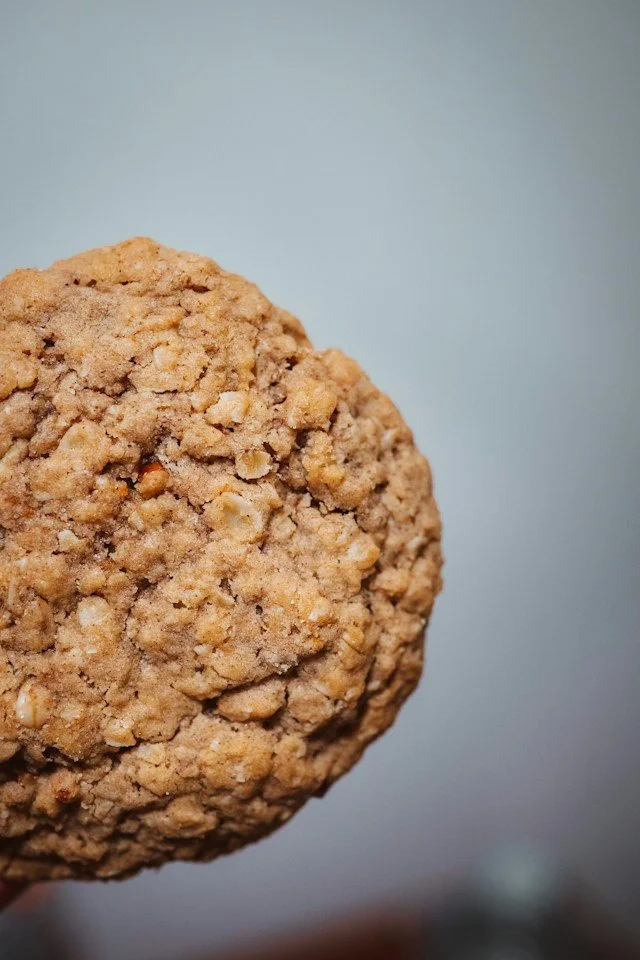
Trigger warning: I love oatmeal cookies. I don’t just put up with them. I like the average oatmeal cookie better than the average chocolate chip cookie.

If I haven’t lost you yet, I’ll admit that beyond loving the taste and texture of oatmeal cookies, I’ll confess there is also the ancillary benefit of feeling healthy when you eat oatmeal cookies. I mean, you’ve got your whole grains, your dried fruit, your nuts. They’re practically health food, right?

A quick search on the internet proves otherwise: one Costco oatmeal cookie clocks in at 230 calories, 9 grams of fat, and 20 grams of carbs.


When God Shows Up and You Miss Him

When God Shows Up and You Miss Him

It took me nine years after the terrible incident to recognize that God was present. At the time, the experience felt more like an attack from the enemy than a gift from God. But as I processed the event with others who had been there, a lightbulb went on. When I began to see the good fruit that had come from that nightmare, I recognized God at work in ways I had previously missed.

Have you ever missed God at work?

The disciples were certainly not immune to this. Jesus was ministering in Galilee when a great crowd followed him into a desolate place.

This Week's Recommendations

This Week's Recommendations
    1. How to have a soft heart: Katie Laitkep says, “When the season you expected to be brief stretches from months to years, layered with added pressures in other areas of your life, the weight of it all doesn’t just exhaust your body; it changes how you see the world. You grow more guarded. You lower your hopes, expecting disappointment and attempting to protect yourself from anyone or anything that could cause more pain, whether it’s people, circumstances, or God Himself.”

    2. What is wrong with the world? Paul David Tripp answers, “When we are looking for answers to the world’s problems, we can begin in an unlikely place: the doctrine of sin.

The Spirit's Voice

The Spirit's Voice

“Pastor, I was really touched when you said…”

One of my favorite parts of pastoral ministry is hearing how Scripture, sermons, Bible studies, and blog posts are shaping the lives of people in the congregation.  

A common occurrence in these conversations is when someone tells me I said something in a sermon that I did not actually say. What happened? Usually, it’s not because the person was inattentive.

This Week's Recommendations

This Week's Recommendations
  1. Two ways to worry about AI: Alan Noble begins, “If you’ve followed some of the news in AI recently, you might be feeling scared. Concerning stories have been coming from two leading AI companies this summer.”

  2. What gratitude was never meant to do: Tracy Harper says, “We run into problems with gratitude, though, when we use it as a countermeasure to avoid the thoughts and emotions that disappointment brings to the surface. God was prompting me to sit with the deeper question of why this mattered so much to me, and I couldn’t use my list of blessings to avoid going there with him.”

How Can I Excuse Myself

How Can I Excuse Myself

You’re running a day care center that closes at 5pm. You notice a handful of parents pick up their children late. Every time a parent arrives late it impacts you: you must stay late—family dinners and events are lost. What do you do? Realizing that your honor system isn’t cutting it, you start charging a fine for arriving late.   

And then the unexpected happens: the number of late-arriving parents doubles.

This experiment was run by economists trying to help an Israeli daycare. The results confounded the researchers.

This Week's Recommendations

This Week's Recommendations
  1. Three things stress reveals: Michael Kelley says, “And maybe you, too, know what that bursting feels like – it’s when something small that ordinarily shouldn’t have bothered you as much as it did just sets you off. And you find yourself overreacting to that single incident because of the accumulated pressure from the other circumstances.”

  2. Seraphim may be flying serpentine creatures: Wyatt Graham challenges how we envision these angelic beings, “The word saraph occurs only seven times in the Hebrew Bible. Its verbal form means “to burn,”

Can We Choose Our Identity?

Can We Choose Our Identity?

I was fourteen years old, 5’9” and 130 pounds. My backpack hung loosely over my shoulders and butterflies filled my stomach. It was the first day of high school. I navigated the path from my fourth period class toward the cafeteria in a sea of three thousand mostly new faces. Who would I sit with? I saw the group of guys I had hung around with in middle school: jocks who had made those three years fairly miserable for me.

I scanned the grass and picked out the groups: band kids, several kids playing chess, kids playing pick-up basketball. I saw one gathering playing Dungeons and Dragons.

The Mark of the Beast and The Mark of God

The Mark of the Beast and The Mark of God

We are all familiar with the mark of the beast. Fear and confusion surrounding it seem to swirl around it. As a child, I remember hearing a preacher declare that the birthmark on Soviet President Mikhail Gorbachev’s head was the mark of the beast. We were warned that Visa cards or barcodes might be the mark. Today, rumors abound that the mark is a QR code, a vaccine, or something connected to artificial intelligence.

Such speculation dramatically misunderstands John’s explanation of the mark of the beast in the book of Revelation.

This Week's Recommendations

This Week's Recommendations
  1. The exhausting work of being your own foundation: Christopher Cook says, “And as much as I wish it were different, the Word of the Lord from Isaiah does not promise the storm will lift on your timeline; it promises a foundation that will not move while the storm within (and without) rages. The counterfeit tells you to become stable enough to stop being afraid.”

  2. Our motive for obeying God shouldn’t be gratitude: John Piper says, “There is an impulse in the fallen human heart—all our hearts—to forget that gratitude is a spontaneous response of joy to receiving something over and above what we paid for.