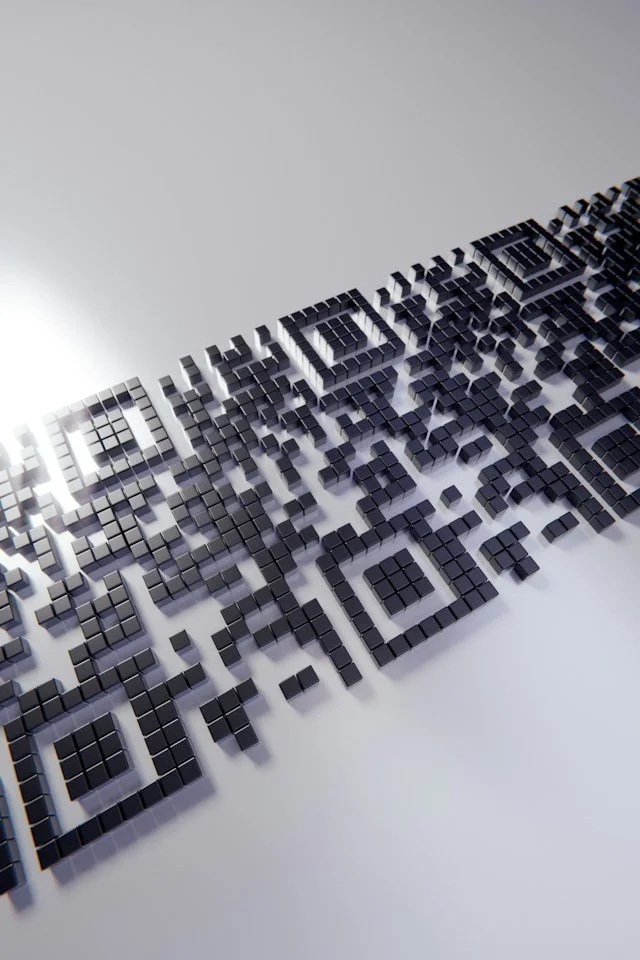
We are all familiar with the mark of the beast. Fear and confusion surrounding it seem to swirl around it. As a child, I remember hearing a preacher declare that the birthmark on Soviet President Mikhail Gorbachev’s head was the mark of the beast. We were warned that Visa cards or barcodes might be the mark. Today, rumors abound that the mark is a QR code, a vaccine, or something connected to artificial intelligence.
Such speculation dramatically misunderstands John’s explanation of the mark of the beast in the book of Revelation.
The best-known passage on this subject appears in Revelation 13:
Also [the second beast) causes all, both small and great, both rich and poor, both free and slave, to be marked on the right hand or the forehead, so that no one can buy or sell unless he has the mark, that is, the name of the beast or the number of its name. This calls for wisdom: let the one who has understanding calculate the number of the beast, for it is the number of a man, and his number is 666. (Rev. 13:16-18)
The Dragon and the Two Beasts
To understand the mark of the beast, we must first understand the beast. Or, more precisely the dragon and the two beasts that form an unholy imitation of the Trinity.
In Revelation 12, the first member of this unholy trinity appears: the dragon. John recounts the spiritual conflict between the dragon, the woman who represents God’s covenant people, and the Christ-child.
“And another sign appeared in heaven: behold, a great red dragon, with seven heads and ten horns, and on his heads seven diadems” (Rev. 12:3). To understand John’s vision, we must recognize the rich Hebraic symbolism and imagery woven throughout this apocalyptic book.
The imagery of the serpent, Leviathan, and dragon appears throughout the Old Testament (Genesis 3, Job, and Ezra, respectively). John draws upon that imagery to portray Satan as the ancient enemy of God and His people. The dragon has seven heads (a number of completion) with ten horns (representing power, and also a number of completion). John is showing that the spiritual enemy that sought to destroy Christ continues to oppose God’s purposes throughout the world.
In Revelation 13, we meet the second member of the unholy trinity: the beast from the sea. “And I saw a beast rising out of the sea, with ten horns and seven heads, with ten diadems on its horns and blasphemous names on its heads” (Rev. 13:1). Like the dragon, the beast has seven heads and ten horns. John continues, “And the beast that I saw was like a leopard; its feet were like a bear's, and its mouth was like a lion's mouth. And to it the dragon gave his power and his throne and great authority” (Rev. 13:2).
John’s description draws directly from Daniel’s prophetic vision in Daniel 7. In Daniel’s vision, four beasts emerge from the sea, representing successive empires that will emerge (the lion-eagle is Babylon, the bear is the Medo-Persian empire, the leopard-bird is the Greek empire, the iron-toothed animal is the Roman empire). John’s beast combines creatures from all four. It is a monstrous composite, representing rebellious human political power in all its forms.
What is the meaning? The point is similar to the imagery of the seven heads and ten crowns: the beastly pattern of pride, persecution, idolatry, and rebellion against God can appear in every empire and age. Satan is not omnipresent, but his corrupting influence extends widely through the kingdoms of this world. John then describes the first beast as receiving a mortal wound and appearing to recover from it (Rev. 13:3). Some interpreters see an initial fulfillment in Nero’s suicide (68AD) and the apparent death of the Roman Empire that followed. The empire’s renewed strength under Vespasian, Titus, and Domitian may have contributed to this imagery. The world responds by worshiping the haughty and blasphemous beast (Rev. 13:4-10).
We finally meet the third member of the unholy trinity: the beast from the earth. This beast appears lamb-like but speaks with the voice of the dragon, “Then I saw another beast rising out of the earth. It had two horns like a lamb and it spoke like a dragon” (Rev. 13:11). He also performs miraculous signs and makes the earth worship the first beast (13:12-15).
The Mark of the Beast
With this background in view, we return to the mark of the beast. Are you aware that in the book of Revelation, those who follow God are also marked or sealed as his own?
Do not harm the earth or the sea or the trees, until we have sealed the servants of our God on their foreheads. Rev. 7:3
They were told not to harm the grass of the earth or any green plant or any tree, but only those people who do not have the seal of God on their foreheads. Rev. 9:4
Then I looked, and behold, on Mount Zion stood the Lamb, and with him 144,000 who had his name and his Father's name written on their foreheads. Rev. 14:1
Why are both God’s seal and the beast’s mark associated with the forehead and hand? The imagery echoes God’s instructions to Israel following the Ten Commandments, “You shall bind them as a sign on your hand, and they shall be as frontlets between your eyes” (Dt. 6:8). To this day, Orthodox Jews wear phylacteries (teffilin) on their foreheads and on their arm and hand.
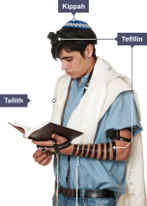
God’s intention of the commandment was not literal. Any Jew to this day would tell you that they are not fulfilling the law by the binding of their phylacteries; the phylacteries are a physical reminder of a spiritual reality. We are to bind God’s truth to our mind (head) and actions (hand). Both the mark of God and the mark of the beast, then, are not a physical, but a spiritual mark. If you worship God, you will be spiritually marked by God. If you worship the beast, you will be marked by him.
Paul cautions us, “Do not be conformed to this world, but be transformed by the renewal of your mind” (Rms. 12:2). Peter echoes, “do not be conformed to the passions of your former ignorance” (1 Pet. 1:14). Paul tells us that, as we behold “the glory of God, are being transformed into the same image from one degree of glory to another” (2 Cor. 3:18). The Psalmist warns us that, for the idol worshiper, “Those who make them become like them; so do all who trust in them” (Ps. 115:8). Jeremiah similarly warns those who “went after worthlessness, and became worthless” (Jer. 2:15). The mark of the beast cautions us: we become what we worship.
Calculating the Number of the Beast
This leaves one final question: how do we calculate the number of the beast: 666? There are at least two explanations. The first is that John uses the Hebrew practice of Gematria, which assigns numbers to each Hebrew letter. Using Gematria, Cesar Nero calculates to 666. This surely was in part what John intended to communicate to his audience.
More broadly, John is communicating that the beast falls short of God’s glory on every level. 7 is the number of perfection; 6 is imperfection. Three is the number of magnification, so 666 is magnified imperfection.
So, what is the mark of the beast? It is those who have been marked by the one who masquerades as an angel of light (2 Cor. 11:14), but is, in fact, a fraud. This arrogant blasphemer prowls about (1 Pet. 5:8), seeking to draw worship to himself. He uses our own fleshly desires, fears, and cultural and political influences.
If our attention of the beast is focused on trying to figure out which individual is the Antichrist, or whether the mark of the beast is a QR code or a vaccine, we’ve been duped by that demonic magician, Satan. He’s diverted our attention from the true threat hiding in plain sight: when we worship ourselves or the broken things of this world instead of the true Triune God who alone is worthy of our praise. Reject the Frankenstein-idols of this world and worship the Holy One.
In The Art of War, Sun Tzu says, “If you know the enemy and know yourself, you need not fear the result of a hundred battles.” Know God. Know yourself. And know the enemy. Don’t be duped by his masquerading, don’t be confused by misunderstandings of the mark of the beast. Be sealed by the Holy God and hold fast to him alone.
You May Also Appreciate:
Would You Receive Him?
Photo by Risto Kokkonen on Unsplash