


Fear

The Mark of the Beast and The Mark of God

The Mark of the Beast and The Mark of God

We are all familiar with the mark of the beast. Fear and confusion surrounding it seem to swirl around it. As a child, I remember hearing a preacher declare that the birthmark on Soviet President Mikhail Gorbachev’s head was the mark of the beast. We were warned that Visa cards or barcodes might be the mark. Today, rumors abound that the mark is a QR code, a vaccine, or something connected to artificial intelligence.

Such speculation dramatically misunderstands John’s explanation of the mark of the beast in the book of Revelation.


The Healing Horror of the Apocalypse

The Healing Horror of the Apocalypse

I really dislike horror movies. I’ve only seen a handful in my life, and I’ve never enjoyed the experience. But the American public gobbles them up. I remember a time when horror movies only came out around Halloween; now it seems there isn’t a time of year when at least one horror movie isn't playing in theaters.

Experts have researched what the draw of horror movies is. They call the experience “recreational fear”: the ability to navigate fear in a safe environment. The audience experiences an adrenaline rush of danger, and then the sweet relief of escape. Horror movies can provide an emotional release for anxiety, stress, or grief.

Come, You Who Are Anxious

Come, You Who Are Anxious

Anxiety comes in many shapes and forms. Do you ever have a feeling of dread? Does your chest ever tighten in fear? Do you feel like you can’t slow down your mind?

How can we escape anxiety’s clutches? Let’s look at how Jesus responds to those gripped by fear.

Jesus first points us to the sovereignty of God. As Jesus departs the upper room where he and his disciples ate the Last Supper and he stooped and washed their feet, the hearts of the eleven were in turmoil. Jesus had shared the frightening news that Judas had allowed Satan to enter his heart and that Peter would deny him

This Week's Recommendations

This Week's Recommendations
  1. Why the internet is making men and women hate each otherSamuel James writes, “We’re on the threshold of a vicious cycle. Men and women are declining relationships with each other, which means they are more likely to be suckered in by the algorithmic gender silo. But the more they take in a biased, imbalanced view of the other, the less interested they are in relationship.”

  2. Mutant virtuesJacob Crouch says, “These mutant virtues parade themselves out in the public square as though they are the real thing. So-called justice, instead of being the righteousness of God on display,

When the Battle Rages, Seek Union

When the Battle Rages, Seek Union

There is more going on around us than we can see. The physical world is surrounded by the spiritual realm. A spiritual battle rages around us.

I grew up during a time of heightened awareness of the spiritual realm. I remember lying in bed as a high school student, heart pounding and eyes glued to Frank Peretti’s This Present Darkness. I recall driving past Hindu temples in Trinidad overwhelmed by a feeling of spiritual darkness. Our church hosted workshops based on Neil Anderson’s The Bondage Breaker. We were taught to put on the armor of God piece by piece and to claim the blood of Jesus when confronting dark spiritual forces.

The Cost of Awkward

The Cost of Awkward

The next day, the extended family hosted a party for us. As we drove up to the farm, the pressure of meeting a whole group of strangers began to mount. I felt like the boyfriend from the city visiting his girlfriend’s family farm in a Hallmark movie. To quote Megamind (voiced by Will Ferrell), I was “shaking in my custom baby-seal leather boots.”

The men headed outside to lawn chairs while the women stayed inside. I drifted outside with a group of men I had never met and sat down. I had a beer in my left hand like the rest of the guys, but unlike everyone else…

This Week's Recommendations

This Week's Recommendations
  1. Let me dwell in your tent foreverWes Bredenhof explains how to understand David’s cry  in Psalm 61:4, “Let me dwell in your tent forever!” “Now here’s an important detail about the tabernacle:  no one was allowed to dwell in it.  It was God’s dwelling and God alone.  By God’s command, the High Priest came into the Most Holy Place once per year.”

  2. The body keeps score. But the mind and heart do tooBeth Claes says, “Being a Christian doesn’t prevent trauma or eliminate body-mind responses to it. But recognizing that God created us with an interconnected body, mind, and heart informs how we understand trauma

This Week's Recommendations

This Week's Recommendations
  1. Blessing the voyage: launching them without losing them: My friend and colleague Stacy MacLaren with a timely piece, “We don’t raise our children to keep them. We raise them to release them.”

  2. An unremarkable life: Jonny Pollock says, “The modern mantra appears simple. Be remarkable. Whether through career achievements, our social media feeds, or our personal brands (don’t roll your eyes, we all have them!), the pressure is relentless.”

This Week's Recommendations

This Week's Recommendations

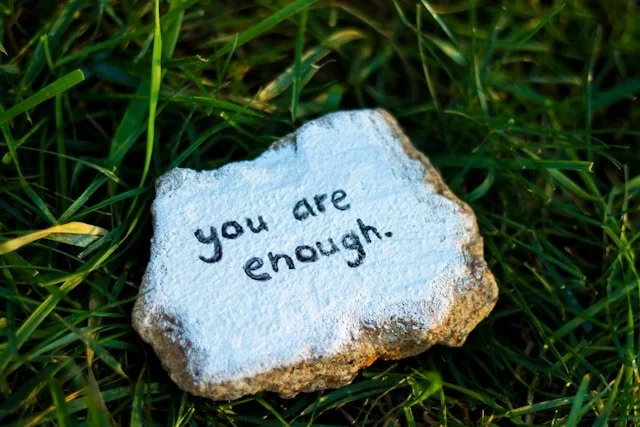
The reality behind our culture’s favorite mantra: Matthew McCullough begins, “I don’t know where it came from, but now it seems to be everywhere. I hear it on podcasts and TV shows. I’ve seen it on T-shirts and social media graphics. A quick search for it on Amazon brings up hundreds of results, ranging from books for kids and adults to silver charm bracelets to hoodies of many colors to embroidered makeup cases to wall hangings and throw pillows and stickers to place on your rearview mirror. I’m talking about the simple, uplifting mantra for our times: ‘You Are Enough.’”

Breaking the Power of Shame

Breaking the Power of Shame

Shame has power.

Shame is one of the most destructive forces on this earth. Shame is harmful because it attacks our spiritual and emotional life. Unlike guilt, shame can come from actions that aren’t even wrong. People experience shame over their body and over their family of origin. Shame is a visceral and physical experience that can manifest itself in depression and self-medicating. Shame tells us totalizing truths about ourselves, often truths that cannot be remedied. “You’re always,” “you will never” shame whispers.

Shame is different from guilt in that where guilt is connected with our actions, shame is connected to our identity.