




When peace feels impossible: Christopher Cook says, “As such, when Paul says “do not be anxious,” he is not instructing believers to numb their emotions, detach from their circumstances, or pretend life doesn’t hurt. He’s inviting us to recalibrate the affections of our hearts. And that recalibration begins with a theological claim far deeper than a surface-level command. It begins with presence.”
When waiting draws us near: Bethany Broderick says, “Our world seems allergic to waiting. We pay hundreds of dollars for faster shipping

Partners in the Gospel
“We won!” If you’re a sports fan, you might have bellowed those words when your favorite team emerged victorious from an epic showdown.
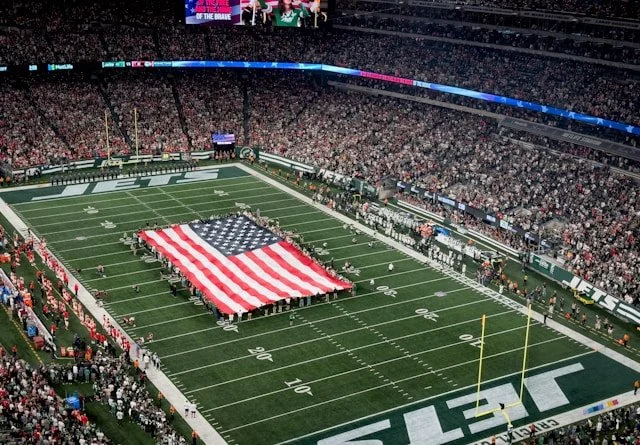
But of course, we know that we didn’t win at all. I sat on my couch and cheered for my Chiefs. But it was Andy Reid who drew up the play, Patrick Maholmes who threw the pass, and Travis Kelce who caught it.
They, not we, won.
Many of us have come to believe the opposite lie regarding the church. It’s easy to think they are doing the work of the gospel. In a celebrity culture, it’s easy to get sucked into thinking that pastors do ministry and preachers do gospel work.
Harmless Fun? Don't Bet On It.
“Download this app!” I urged my family, “You’ll get $200 free to bet!” Five years ago sports betting became legal across most of the United States. From 2019 to 2023, sports betting downloads increased from 6 million to 33 million. In 2021 alone, the percentage of Americans who regularly bet on sports more than doubled jumping from 5% to 12%.
By 2024, the sports betting market reached an estimated size of $70 billion, generating $13.7 billion in revenue. Analysts predict the industry will continue its skyrocketing growth, projecting it to reach $187 billion by 2030.
This Week's Recommendations
What to do in conflict: Benjamin Vrbicek says, “Rarely do interpersonal struggles get better until the people involved move up what I call the ‘Hierarchy of Communication Ladder.’”
Five ways AI is impacting the next generation: Shelly Melia reports, “According to Common Sense Media, half of teenagers use AI companions regularly, while almost 75% of teens have experimented with them. Another study found almost 1 in 5 students have used their back-and-forth conversations with AI to have a romantic relationship.”
How Motherhood Changed Me
Today I have the privilege of having my wife, Angel, share her thoughts on motherhood and her spiritual journey. You’re in for a treat. Angel is a counselor at Whole Hope Christian Counseling
I am a type A, firstborn. By the time I was twenty, I had my life planned out. After marriage, John would work to get me through college, and then I would work as an elementary school teacher to get John through seminary without debt. Then he would graduate, we would move into our white-picket-fence dream home, start our family, and begin a life of ministry together.
I feel like you went through marriage, education, and childbearing at such a young age. Would you please consider adding your age at various stages? You’ll see my clues, lol.
Sheep Without a Shepherd
You see it, don’t you? A co-worker quietly losing their battle with alcoholism. A cousin whose marriage and family are unraveling. A friend struggling under the weight of a debilitating eating disorder. Pain is everywhere. People are hurting all around us.
If we are able to glimpse even a fraction of the world’s pain, can you imagine what Jesus saw? For any one of us, such suffering would be overwhelming. Yet, what was Jesus’ response to a world filled with the “harassed and helpless”?
Recently, while reading through the gospel of Matthew, I returned to the well-worn passage where Jesus tells his disciples,
This Week's Recommendations
A scientist produced a monogamy study, including us: The most monogamous animal will likely surprise you (six animals rank higher than humans!). But this won’t surprise you, “Overall, less than 10% of mammals are monogamous, according to Dyble.”
Don’t overthink your problems: Wyatt Graham begins, “When we face criticism or feel uncertain about our actions, our natural tendency is to analyze every detail, replay every conversation, and search for what we might have done wrong. But Scripture offers us a surprisingly liberating approach: acknowledge clear sin, but don’t lose yourself in endless rumination over unclear accusations. Instead, trust that God knows your heart better than you do.”
The Questions Jesus Asked
We ask God a lot of questions.
· “Why do bad things happen?”
· “Why is there only one way to heaven?”
· “Why are some people who follow you hypocrites?”
· “Why don’t you make it more obvious that you are God?”
God invites questions. These questions haunt some. For others, the questions create confusion and stall their faith journey. For others, these questions deepen their faith as they wrestle them through with God.
But the line between us and heaven is not one way.
Did you ever consider that God might have questions for you?
This Week's Recommendations
How the West became pagan—again: Derek Rishmawy says, “When you think about your average non-Christian today... It’s far more likely to be someone who never went to church, checks her astrology chart, likes nature, takes an interest in breathwork because it connects her to reality, and maybe believes in the simulation theory.
Our sorrows keep getting more sorrowful and joys keep getting more joyful: Christopher Ash says, “ Far from the life of faith, gradually steadying to some calm mid-point between sorrow and joy, the sorrows deepen, and yet are infused with stronger joys. It gets, if I may put it loosely, both worse and better.”
When Trauma Turns to Wickedness
Trauma is everywhere. One in four women and one in six men will be sexually abused. At least one in seven children have experienced abuse or neglect in the past year. More than one in four abused and neglected children will later abuse their own children.
Psychological research continues to demonstrate the tentacle-like nature of the impact of trauma. Effects include dissociation, panic attacks, hyperarousal, loss of sleep, low self-esteem, grief, self-harm, suicidal ideation, and substance abuse.
We tend to associate trauma with those who were assaulted or were involved in military combat,