




sin

Pest Control and the Human Heart

Pest Control and the Human Heart

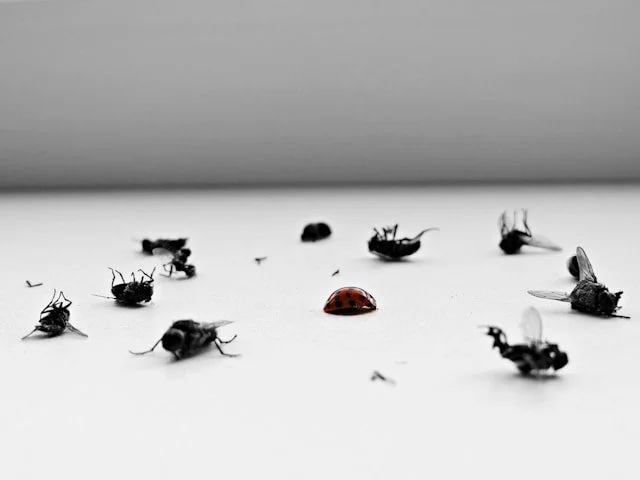
I never thought much about the pest control industry—until that Saturday. As we prayer-walked the neighborhood adjacent to our church, I found myself chuckling at how many residents apparently worked for pest control companies. I began noticing and counting the trucks parked in driveways: Truly Nolen, Northwest, Greenshield, Responsible, Action, Western, Aptive, SOS. Eight pest control companies represented in a single neighborhood.

There are more than 34,000 pest control businesses in the United States employing over 167,000 specialists. Together, they generate upwards of $22 billion in annual revenue, and the industry is projected to grow steadily at a 5.7% rate annually. 

How to Battle Lust

How to Battle Lust

Sexuality saturates our culture. The human heart, already an engine inclined toward  malformed desires, has plenty of fuel available via the internet alone to propel it toward disaster. How can we remain pure in a world bent on dragging us into impurity?   


Indeed, the world is partial. The battle against lust is a three-pronged battle against our flesh, the world, and Satan. Paul warns us to “not gratify the desires of the flesh” (Galatians 5:16) by later specifying some of those desires: “Now the works of the flesh are evident: sexual immorality, impurity, sensuality” (Galatians 5:19). Our flesh lures us into believing that we can take a shortcut to joy and intimacy.

Harmless Fun? Don't Bet On It.

Harmless Fun? Don't Bet On It.

“Download this app!” I urged my family, “You’ll get $200 free to bet!” Five years ago sports betting became legal across most of the United States. From 2019 to 2023, sports betting downloads increased from 6 million to 33 million. In 2021 alone, the percentage of Americans who regularly bet on sports more than doubled jumping from 5% to 12%.

By 2024, the sports betting market reached an estimated size of $70 billion, generating $13.7 billion in revenue. Analysts predict the industry will continue its skyrocketing growth, projecting it to reach $187 billion by 2030.

This Week's Recommendations

This Week's Recommendations
  1. A scientist produced a monogamy study, including us: The most monogamous animal will likely surprise you (six animals rank higher than humans!). But this won’t surprise you, “Overall, less than 10% of mammals are monogamous, according to Dyble.”

  2. Don’t overthink your problems: Wyatt Graham begins, “When we face criticism or feel uncertain about our actions, our natural tendency is to analyze every detail, replay every conversation, and search for what we might have done wrong. But Scripture offers us a surprisingly liberating approach: acknowledge clear sin, but don’t lose yourself in endless rumination over unclear accusations. Instead, trust that God knows your heart better than you do.”

This Week's Recommendations

This Week's Recommendations
  1. Soul is making a comeback: Wyatt Graham begins, “Everything seems to suppress soul. We live to catalyze efficient products. Our labour is counted, quantified, and measured. Human resource departments view us as human resources. They measure our performance by mechanical standards, and our salary relies on whether or not we have added value to a corporation. Work commodifies humans as resources; it is why HR departments exist. You are coal to be mined.”

  2. Gen Z women struggle to find their way in Christian faith and community: A recent Barna study reports, “Currently, young adult women report the lowest rates of Bible reading, prayer and church attendance among their peers.”

Unbelief Isn't a Sin, or Is It?

Unbelief Isn't a Sin, or Is It?

An earnest interlocutor responded to me, “God wouldn’t hold it against me if I don’t believe in him, would he? If he hasn’t made faith clear enough, isn’t that his responsibility?”

Is unbelief a sin? Surely not!

Culturally, we don’t take unbelief very seriously. We tend to think of unbelief as a neutral characteristic, if not even something that might show a particular strength of character. We might consider someone who doesn’t believe as being sharp minded, thoughtful, or not gullible.

Many Christians even diminish the nature of unbelief. I recently read a book by a popular pastor who claimed that Jesus didn’t call his followers to believe,

Escape

Escape

“What’s the thread between your addiction and your longings for your future?”

“Escape,” he responded.

Given his story, escape made perfect sense. How else could he cope with the overwhelming weight of life? When pain comes—as it inevitably does—we are tempted to seek escape. We often avoid hard conversations in hopes of escaping conflicts and let downs. In an attempt to numb the hurt, it’s easy to scroll, eat a bowl of ice cream, buy something on Amazon, or watch porn.

The global market for pain management drugs is substantial and rising. In 2023, the market was valued at $80.1 billion or $84.07 billion.

This Week's Recommendations

This Week's Recommendations
  1. Go ahead, bring a knife to a gunfight: Tim Challies says, “They say you should never bring a knife to a gunfight. It’s a colorful little proverb that emphasizes the value of proper preparation, yet I’m not sure it’s a proverb God cares much for. I sometimes think of the biblical judge Shamgar, who entered a battle armed with only an ox-goad—a stick used to poke oxen to get them to comply with directions. Shamgar brought an ox-goad to a sword fight, yet emerged victorious and with 600 Philistines dead at his feet.

  2. Help! I think I’m a bad parent: Adam Griffin says, “Our inadequacy in parenting is a great gift. If we weren’t inadequate, when would we run to Jesus?

How Church Abuse Reveals the Lies We Tell Ourselves

How Church Abuse Reveals the Lies We Tell Ourselves

Three years ago an atomic bomb hit the Southern Baptist Convention (SBC), the largest Protestant denomination in the United States, with an estimated 14 million members across more than 47,000 churches. An in-depth investigative report demonstrated that the Executive Committee of the SBC was aware of pervasive sexual malfeasance in their ranks over the past fifteen years and refused to act. The Executive Committee swept sexual abuse allegations under the rug, perpetrators were moved from one congregation to another to hide their abuse, and earnest appeals for reform were denied.

This Week's Recommendations

This Week's Recommendations
  1. How Christians can inadvertently moralize unpleasant emotions: Brad Hambrick asks, “’What percentage of our unpleasant emotions are accounted for by sin and how much by suffering?’ The simple answer is, “We don’t know.” If anyone says with confidence that most unpleasant emotions are caused by one or the other, they are merely revealing their bias.”

  2. Everything matters: Christa Threlfall says, “It’s not enough to eliminate the “big sins” that other people can see; Jesus wants every part of our being to belong to him.”