


This Week's Recommendations

This Week's Recommendations
  1. How the West became pagan—again: Derek Rishmawy says, “When you think about your average non-Christian today... It’s far more likely to be someone who never went to church, checks her astrology chart, likes nature, takes an interest in breathwork because it connects her to reality, and maybe believes in the simulation theory.

  2. Our sorrows keep getting more sorrowful and joys keep getting more joyful: Christopher Ash says, “ Far from the life of faith, gradually steadying to some calm mid-point between sorrow and joy, the sorrows deepen, and yet are infused with stronger joys. It gets, if I may put it loosely, both worse and better.”


When Trauma Turns to Wickedness

When Trauma Turns to Wickedness

Trauma is everywhere. One in four women and one in six men will be sexually abused. At least one in seven children have experienced abuse or neglect in the past year. More than one in four abused and neglected children will later abuse their own children.

Psychological research continues to demonstrate the tentacle-like nature of the impact of trauma. Effects include dissociation, panic attacks, hyperarousal, loss of sleep, low self-esteem, grief, self-harm, suicidal ideation, and substance abuse.

We tend to associate trauma with those who were assaulted or were involved in military combat,

This Week's Recommendations

This Week's Recommendations
  1. Soul is making a comeback: Wyatt Graham begins, “Everything seems to suppress soul. We live to catalyze efficient products. Our labour is counted, quantified, and measured. Human resource departments view us as human resources. They measure our performance by mechanical standards, and our salary relies on whether or not we have added value to a corporation. Work commodifies humans as resources; it is why HR departments exist. You are coal to be mined.”

  2. Gen Z women struggle to find their way in Christian faith and community: A recent Barna study reports, “Currently, young adult women report the lowest rates of Bible reading, prayer and church attendance among their peers.”

Breaking the Power of Shame

Breaking the Power of Shame

Shame has power.

Shame is one of the most destructive forces on this earth. Shame is harmful because it attacks our spiritual and emotional life. Unlike guilt, shame can come from actions that aren’t even wrong. People experience shame over their body and over their family of origin. Shame is a visceral and physical experience that can manifest itself in depression and self-medicating. Shame tells us totalizing truths about ourselves, often truths that cannot be remedied. “You’re always,” “you will never” shame whispers.

Shame is different from guilt in that where guilt is connected with our actions, shame is connected to our identity.

The Transforming Word

The Transforming Word

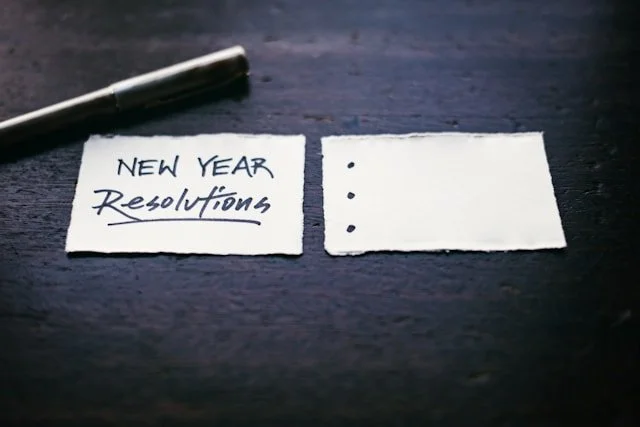
With a new year comes new resolutions: aspirations for improvement. If you could add just one discipline to your life, which one would make the most impact? Diet? Exercise? Meditation?

The answer might be reading the Bible.

If you think about, it’s not surprising that God’s Word is so transformative in our lives. Do you remember the first novel you cried when you read? Do you remember reading a book that changed the way you think about life? I have a distinct memory from seventh grade. A frayed paperback copy of John Steinbeck’s Of Mice and Men shook in my hands as I wept over the final scene with George and Lennie.

This Week's Recommendations

This Week's Recommendations
  1. The dignity of ordinary work: Alastair Herd says, “When researchers examined what actually predicts whether workers feel their jobs are useless, they discovered something profound. The strongest correlation was with a single factor: whether workers felt respected by their immediate manager.”

  2. What Martha’s problem really was: Cindy Matson asks, “But what if Martha’s problem didn’t have anything to do with hospitality or domestic chores? And what if you and I struggle like Martha far more often than we think?”

The Best of the Bee Hive 2025

The Best of the Bee Hive 2025

“Gracious words are like a honeycomb,
sweetness to the soul and health to the body.”

Proverbs 16:24

I write because I believe these words to my core. Following a forty day fast, Jesus responds to Satan’s temptation to turn loaves into bread, by quoting Moses’s admonition to the Israelites who had seen that very type of miracle every day for forty days, “Man shall not live by bread alone, but by every word that comes from the mouth of God” (Matt. 4:4/Dt. 8:3).

Israel had depended on God’s miraculous hand to bring manna for forty years—what could be more important than this daily bread?

Your Heart Is Not a Toy

Your Heart Is Not a Toy

“That isn’t a toy!” parents warn a child playing with a knife or a hammer.

Pharaoh thought he could play a game with God and win. He lost.

Your heart is not a toy.

The story of God’s battle with Pharaoh in the book of Exodus is the story of the consequences of a hardened heart. It’s the story of someone who thought they could toy with God and with their heart. We cannot.

In the first five plagues, Pharaoh’s hardens his heart three times and his heart “is hardened” (it’s ambiguous who is doing the hardening) twice.

This Week's Recommendations

This Week's Recommendations
  1. The ghost of Christmas neverSamuel James with a poignant Christmas reflection, especially for young men. “Fear is powerful. It warps the mind and shrinks the soul. It can deform character, like in Scrooge, or elicit despair, like in George. Most of all, it freezes. Fear paralyzes its host, suggesting that the next step will undoubtedly be wrong, or the next word will come back to haunt.”

  2. Human weakness doesn’t limit GodPaul David Tripp reminds us, “Sometimes we make good-hearted promises that later we realize we are unable to keep. We know things need to get done, but we do not have the power or the wisdom to do them. There is nothing that God has promised to do or that we need him to do that he is unable to do. Nothing.”

Hark! Born to Raise

Hark! Born to Raise

What kind of immortality do you dream of?

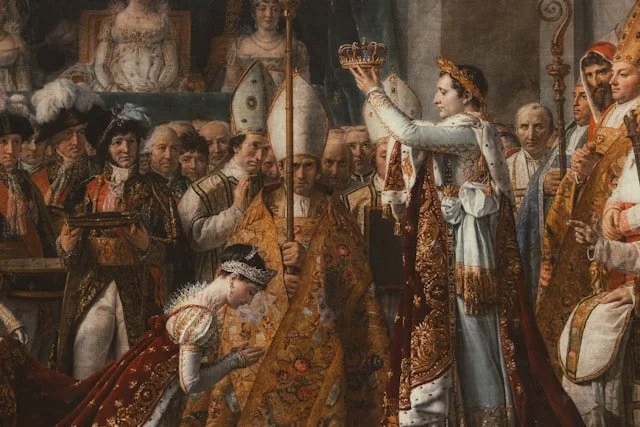
At just 19 years old, an ambitious commissioned officer of the French Royal Army faced a life-defining moment. As a revolution swept through France, would he support the people or the monarchy? His decision was based, as many would be throughout his life, more on strategy than belief. Which side would further his ambitions? As he would many times in his life, Napoleon Bonaparte backed the right side. Seven years later, Napoleon was commander of the French forces. He led an ambitious military campaign against the Austrians and their allies.