


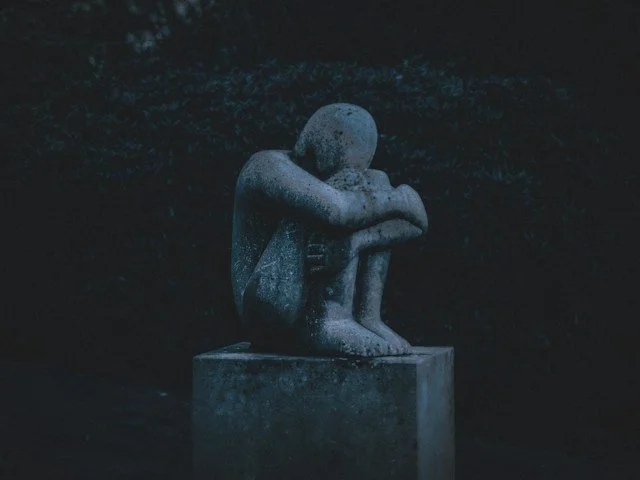
Suffering

Staring Death in the Eye

Staring Death in the Eye

We do not do death well.

We avoid it. We deny it. We even pretend we can control it.

Last week, the French National Assembly advanced what many observers have called  “the most extreme euthanasia law in Europe since Nazi regulations in the 1930s.” French President Emmanuel Macron supported legislation framed as “medical aid in dying” but the proposal goes much further than many existing “death with dignity” laws.

The bill would legalize both assisted suicide—where a person receives a prescribed poison to end their own life—and euthanasia, where a doctor administers the deadly dose.

‍ ‍

This Week's Recommendations

This Week's Recommendations
  1. Bearing the sorrows of the world: A timely piece by Brianna Lambert, “In-between funny reels and crock-pot recipes my feeds shake me with tragedy. Another bomb dropped, another missile fired. Another leader declares war, another group of Christians brutally murdered. My weather app might tell me about a mudslide that kills hundreds while the local news reports on a newly discovered grave of dozens of victims. Sorrow never ends.”

  2. Ozempic Christianity: Christopher Cook says, “In a culture increasingly shaped by immediacy and optimization, even our spiritual hunger has been co-opted by the language of quick returns. 

The Thing Under the Thing

The Thing Under the Thing

I have the opportunity of sharing this space with my friend and mentor, Glen Elliott (you find out more about Glen here). I’m sure you will be blessed by his wealth of wisdom. –John

Last winter I learned something from a dying tree.

There’s a tree outside our bedroom window that provides beautiful shade in the summer. A while back I noticed the leaves were dying—brown, brittle, hanging lifelessly from the branches. So I did what most of us do when something looks unhealthy: I trimmed the visible problems.

I cut off dead branches. Then more branches. I fertilized. I watered. Nothing worked.

This Week's Recommendations

This Week's Recommendations
  1. When a crack becomes a chasm: Dave Almack says, “In years past, family disagreements often resulted in an uneasy detente and shallow conversations at gathering times. Today, in more and more cases, these disconnects have turned into outright hostility and accusations of wrongdoing by parents who have diligently tried to raise their kids to love and honor the Lord. It is a painful and almost unbearable experience to endure and far more common than many might know.

  2. Alysa Liu inspired an exhausted world: Brianna Lambert begins, "Last week, one of the most memorable moments of the Olympics occurred

A New Hope

A New Hope

Jesus wept (Jn. 11:35).

This is the shortest verse in the Bible.  

It is profound as it applies to the heart of Our Lord, Jesus Christ; to those whom he came to save: You.  Me.  Us.  

There is much pain and confusion in our world today.  You don't need to look far to see it.  Some of us have been brought to our knees in grief and in this moment cannot hardly see past it; the same can be said of those of us in the throes of financial woe; relational strife; physical affliction.  

Hopelessness.  Dread.  Despair.

Sheep Without a Shepherd

Sheep Without a Shepherd

You see it, don’t you? A co-worker quietly losing their battle with alcoholism. A cousin whose marriage and family are unraveling. A friend struggling under the weight of a debilitating eating disorder. Pain is everywhere. People are hurting all around us.

If we are able to glimpse even a fraction of the world’s pain, can you imagine what Jesus saw? For any one of us, such suffering would be overwhelming. Yet, what was Jesus’ response to a world filled with the “harassed and helpless”?

Recently, while reading through the gospel of Matthew, I returned to the well-worn passage where Jesus tells his disciples,

When Trauma Turns to Wickedness

When Trauma Turns to Wickedness

Trauma is everywhere. One in four women and one in six men will be sexually abused. At least one in seven children have experienced abuse or neglect in the past year. More than one in four abused and neglected children will later abuse their own children.

Psychological research continues to demonstrate the tentacle-like nature of the impact of trauma. Effects include dissociation, panic attacks, hyperarousal, loss of sleep, low self-esteem, grief, self-harm, suicidal ideation, and substance abuse.

We tend to associate trauma with those who were assaulted or were involved in military combat,

Yesterday's Promise Might Be Today's Curse

Yesterday's Promise Might Be Today's Curse

Where would the bread come from?

Jacob heard his grandchildren’s whimpers as they rustled in the neighboring tents. He knew tears were running down their faces as their tiny empty bellies cried out.

Where would the next meal come from? The drought had devastated the crop.
Travelers from the North had spent the night. They carried bags of grain and shared news that the Pharaoh had storehouses of grain. They had met with his right-hand man, Zaphenath-paneah.

Seven years earlier, the Pharaoh was troubled. He couldn’t shake the nightmares. Skinny cows devouring fat cows, thin stalks of grain consuming fat stalks.

This Week's Recommendations

This Week's Recommendations
  1. Are we the idols? Andrew Noble says, “It is strange to become an idol, isn’t it? It’s hard to wrap your mind around. Yet every day, people are morphing into something like mud. Instead of functioning as images of God, they worship idols and turn into lifeless dust. Life goes wrong when we don’t worship right.”

  2. Weakness in God’s economy: Kirsten shares, “As I consider my heart, my struggle does not come in whether or not I believe that God is able to heal; I believe that God is able to do all that pleases him. Rather, my struggle comes in believing whether or not God is willing; at least in the timeframe I am hoping and praying.”

This Week's Recommendations

This Week's Recommendations
  1. The better way of Christian parenting: Casey McCall argues that appeasement benefits neither the parent nor the child, “Rather than grant your child’s every desire, your job as a parent is to use your God-given authority to redirect those desires toward righteousness (love of God and neighbor) and to train your child to righteously handle the common human experience of coping with the disappointment of unfulfilled desires. In other words, the wise parent prepares the child for adulthood by training the child to be content in all circumstances.”