Always Being Reformed

Always Being Reformed

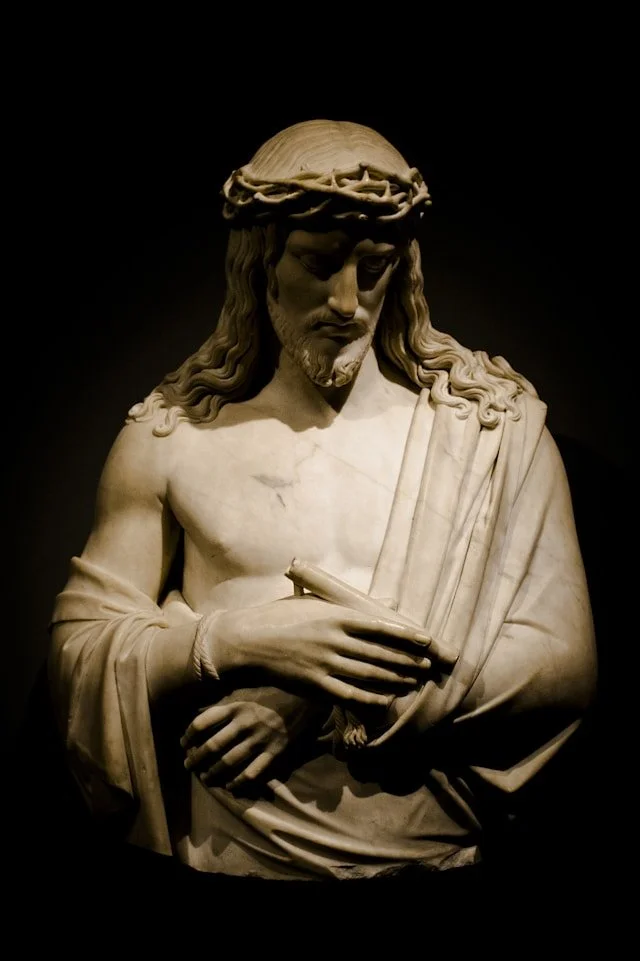
Today we celebrate the 500th anniversary of the Reformation. But unlike the work of Christ on the cross, this side of heaven, God’s work on his church will never be finished. We celebrate the Reformation, but, by the power of God, we are always being reformed.[i]

1500 years after Christ had called to the church to a radical resurrection-faith, the church had sold that cruciform grace for a religion that was more about moral conformity, more about earning your way into God’s favor, than it was about the transformative grace that flowed from a Savior who died and was resurrected that we might be multiplied into his children.[ii] We are always in danger of missing out on what God is doing with us. But reformation is always one open heart away.

The year was 1516 and a 33 year old professor was teaching a class on the book of Romans[iii] at a small university in the small town of Wittenberg, Germany: population 2,000. He was pierced by these truths: that salvation was a gift of God, secured by the death and resurrection of Jesus Christ. The shocking truth that we must be righteous to be saved, but that righteousness could only come from God rocked this monk’s world.[iv]

This Week's Recommendations (Reformation Day Edition)

This Week's Recommendations (Reformation Day Edition)

Next week we celebrate the 500th anniversary of Martin Luther nailing his 95 theses to the door of the Wittenberg church. This event set off a series of events that would culminate in the Protestant Reformation and the church as we know it today. This week's recommendations point us to those events.

1.     How the Protestant Reformation Started: This is a great summary of the transformative events of 500 years ago in Germany, " You probably know at least one thing about Martin Luther: that he nailed the 95 theses to a church door and defied the Roman Catholic Church. This was Luther’s declaration of independence from Rome. The truth is, this is historically inaccurate. Yes, October 31, 1517, would turn out to be the first hint that the Western world was about to be turned upside down. But Luther’s act on October 31, 1517 was not an act of rebellion. It was, in fact, just the opposite. It was the act of a dutiful son of mother church."

2.     A Brief History of the Father of the Reformation: Vance Christie shares the beginning of Luther's story, "October, 2017, marks the 500thanniversary of the igniting of what became known as the Protestant Reformation. Martin Luther is generally considered the father of the Reformation. Luther’s nailing his “95 Theses” to the Castle Church door in Wittenberg, Germany, on October 31, 1517, is commonly cited as the event that sparked reformation fires. While there had been other reformers and reformation efforts before Luther, he certainly was the leading human instrument in the much fuller reformation movement that God brought about in Luther’s era."

3.      John Wycliffe: The Morning Star of the Reformation: Vance Christie shares the story of John Wycliffe, who lived a century before the Protestant Reformation began and who, in his life, paved the way for the work of the Reformation. Christie reports, “Wycliffe challenged a wide range of medieval beliefs and practices: pardons, indulgences, absolutions, pilgrimages, the worship of images, the adoration of the saints and the distinction between venial and mortal sins. He gained the greatest opposition by rejecting the doctrine of transubstantiation, the belief that in Christian Communion the bread and wine (or juice) become the actual body and blood of Christ. Wycliffe believed, rather, that the bread and wine are symbols of Christ’s body and blood, that Christ is present in the communion elements sacramentally but not materially.”

4.      The Reformation PiggyBackers: And now for a smile: Luther was having a splendid Reformation Day. Until those pesky other protestants start trying to improve his Reformation.


Paul's Strange Reasons for Generosity: Show them God!

Paul's Strange Reasons for Generosity: Show them God!

Why do we give? The first hit when you Google “why should I be generous?” is this article which lays our four reasons:

1)      Giving frees you from the “burden of materialism”

2)      Giving helps you “to feel better about yourself”

3)      Giving makes you less self-centered

4)      Giving helps make people like you.

Do you find those reasons compelling? Two of them (1 &3) have echoes of biblical truth in them. But 2 & 4 are shockingly empty reasons.

Paul also has four reasons for giving: none of which overlap with this list. Here is Paul’s list:

1)      Give because giving is a grace

2)      Give because it proves your love of Jesus

3)      Give because Jesus first gave

4)      Give because you will be blessed.

Crucial Conversations by Patterson, Grenny, McMillan, and Switzler

Crucial Conversations by Patterson, Grenny, McMillan, and Switzler

I didn’t know what I was stepping into. Strained voices were raised. Pointed accusations flew like snowballs across the narrow distance between the parties. Trying to scramble for control of the situation I treaded water verbally, first succeeding, then flailing, and then failing monumentally, shifting from mediator to combatant in one fell swoop. It was one of my most significant moments of failure as a pastor and a man.

Your failure in the midst of crucial conversations might not be as dramatic. In fact, maybe you failed by turning tail and running. That’s what is so difficult about these turning-point moments: failure is easy, success is hard.

Crucial Conversations is aimed at equipping the reader with a number of tools to use to navigate high pressure and high consequence conversations. Who couldn't improve in their ability to navigate these conversations? Unlike a lot of books in a similar genre, the authors present several different tools in the course of the book to help navigate these conversations. The book is therefore very content rich and not easy to reduce to a simple technique or phrase. Here is the most concise summary I can come up with: in the midst of crucial conversations, check your heart, listen well, and respond thoughtfully.

This Week's Recommendations

This Week's Recommendations

1.      Why You Can't Forgive Yourself: HB Charles on why "how do I forgive myself?" is an illegitimate question, "This is the self-centered psychology of the world, not the teaching of scripture. In fact, it contradicts the message of the Bible. If I need to forgive myself, it suggests that I am the God that I have offended and need to appease. This way of thinking is not just erroneous, it is blasphemous."

2.      6 Surprises Every Premarital Counselor Should Address: Dave Harvey hits the nail on the head. Thinking about marriage? Read this. Walking alongside someone preparing for marriage? Read this. Feeling alone in your marital struggles? Read this. "Many young couples head into marriage with blinders—believing their marriage will be the fairy tale they dreamed of as they planned a Pinterest ceremony and momentous honeymoon. But the truth is marriage reveals our sin, exposes our desires, challenges our relational network, and requires us to regularly practice costly forgiveness."

3.      What does the Mormon on the Other Side of Your Door Believe? Very helpful primer by Justin Taylor.

4.      What does the Jehovah's Witness on the Other Side of your Door Believe?  Justin Taylor addresses Jehovah’s Witnesses as well.

5.      Pursuit: A month of chasing storms captured in seven spell-binding minutes.

Paul's Strange Reasons for Generosity: Proof

Paul's Strange Reasons for Generosity: Proof

No one argues against generosity. It is a value that is reinforced even in the most secular corners of our society. News reports gushed that over $258 billion was given to charity in 2014, the high water mark of charitable donations in the U.S. That’s a huge amount of money. But that number represents a mere 2% of the US’s GDP. “Two percent of GDP is a huge sum, particularly in comparison to other countries,”[i] praised some, but virtue isn’t graded on a curve.

Two percent is not a number to be proud of as Americans. What about Christians? Unfortunately, we do little better, giving approximately 3% of our income to charity. And fewer than 5% of Christians tithe.[ii] Generosity isn’t graded on a curve.

Most disappointingly is the self-deception of Christians. 17% of Christians report tithing despite the actual number of 5%. Worse still, 10% of those who claimed they tithe actually gave less than $200 to charity.[iii]

This Week's Recommendations

This Week's Recommendations

1.       The Stanford Medicine Report on How Men and Women's Brains Are Actually Different: After nearly 20 years of data, it is clear that there are biological differences between men and women,  "The two hemispheres of a woman’s brain talk to each other more than a man’s do. In a 2014 study, University of Pennsylvania researchers...found that the females’ brains consistently showed more strongly coordinated activity between hemispheres, while the males’ brain activity was more tightly coordinated within local brain regions."

2.       6 Character Traits to Look for in a Potential Spouse Really good lists here. Thoughtful inclusions that ring true to unseen obstacles many couples face. I particularly appreciate the inclusion of "controls his passions" and "is in the process of becoming a leader" for a potential husband and "Knows how to admit she's wrong, ask for forgiveness, grant forgiveness, and give grace when you fail her" for a potential wife.

3.       Just-Around-the-Corner-Spirituality: Mike Emlet reflects on the promises we tell ourselves about the next season of spiritual growth that will be just around the corner: "The blessed and contented life is not somewhere around the corner where we can imagine living in the perfect spiritual greenhouse to nurture growth. It’s right here, right now, as we learn to experience the sufficiency of Christ’s strength for us in the midst of the good, the bad, and the ugly."

4.       Your Sanctification is a Gift: I love this perspective that Tim Challies offers -- something I've never quite thought of this way before. "Your continual growth in holiness is not something you emphasize merely for your own benefit or your own assurance, but something you pursue for the benefit of others. This message cuts hard against the individualism of western society, so is one we need to hear again and again. A wife’s sanctification is a gift she gives her husband. A pastor’s sanctification is a gift he gives his congregation. A parent’s sanctification is a gift he gives his children." 

5.       Just How Big is the Universe? I love feeling my mind dwarfed by presentations like this.  

Paul’s Strange Reasons for Generosity: Giving as Grace

Paul’s Strange Reasons for Generosity: Giving as Grace

Our doorbell rang – an odd occasion –I got up from the dinner table and walked toward the door. My step hitched halfway to the door as I realized it was likely a child selling something… too late. I opened the door and a high schooler stood in front of me, fundraising for his baseball team.

Being asked for money makes me uncomfortable.

There is something reasonable about being uncomfortable when we’re asked for money. The pang might speak to whether we are giving thoughtfully. But the reality is that far too often that twinge of discomfort points not to the worth of the cause, but the grip our hearts have on our money.

In 2 Corinthians, Paul tells us that God doesn’t wasn’t uncomfortable givers, he wants cheerful givers. The way to cheerfulness isn’t by willing ourselves there, it’s by reshaping our affections. In this series we’re going to unpack four transformative reasons about generosity and then unpack Paul’s instructions for how we ought to give.

This Week's Recommendations

This Week's Recommendations

1.       Please Stop Saying Christianity is a Relationship, Not a Religion: Kevin Halloran responds to the claim that Christianity is a relationship, not a religion, "Christianity isn’t a dead religion of boredom at church, life as a hypocrite, and trying to be better than everyone else. It’s having the God of the Universe who was once my enemy as my loving Heavenly Father. It’s having my sins forgiven through Christ’s blood and communion with God by His Spirit. It’s living hope for this broken world and the promise of restoration. And, oh yeah, I have an eternal inheritance that no man, demon, or trial can EVER snatch away from me. Now that is a religion and relationship worth pursuing religiously.”

2.       Why Your Child's Feelings Shouldn't Be the Final Arbiter for How You Parent: Melissa Edgington with this counter-cultural truth: "We have been taught to pay special attention to our kids’ feelings and to validate them as much as we can. I’m not saying this is a terrible practice. I mean, it’s never bad to consider someone’s feelings. But can I say with all honesty that about 85% of a kid’s feelings about things are irrelevant? Kids feel 147 different ways before lunchtime. They get upset if their graham cracker is broken. They cry like their heart is broken because a dog licked their elbow. Worse than that, they will kick and scream like you’re murdering them because you’re trying to buckle them into a carseat or keep them from grabbing a hot burner or stop them from running into the street. If we pay attention to every feeling that a kid has, we will be paralyzed and completely ineffective as parents."

3.       10 Common but Illegitimate Reasons to Get a Divorce: Tim Challies shares from Jim Newheiser's new book on marriage helpful responses to these ten common reasons given for divorce.

4.       They Shall Know Us by Our Clutter: Kristin Du Mez reports, "I recently came across the results of this anthropological study, published in 2012: Life at Home in the Twenty-First Century: 32 Families Open Their Doors... the authors analyzed and cataloged the visible possessions in each and every room of the 32 households—counting, documenting, examining, and coding artifacts in situ, in their place. Devoting thousands of hours to data collection, they hoped to glean insights on the acquisition and organization of material artifacts, and on how families interacted with their possessions, and with one another. The results of the study are at once illuminating and devastating. Their most striking findings concern the sheer magnitude of our material possessions."

5.       Yosemite: Range of Light: The whole earth is full of his glory!

Why I'm Not Giving Up on Social Media

Why I'm Not Giving Up on Social Media

There are plenty who lament the impact social media has had on our lives and relationships. The ripples are real[i]: the dilution of relationships, envy, and loss of time are all undeniable side-effects.

In reaction, more than a few of my friends have unplugged. I know several of my pastor friends who intentionally sideline social media from their lives. They might have accounts, but for the most part, they lie dormant. They have chosen to protect themselves from the negative impact of social media on their lives. I understand the decision and, in terms of personal emotional health, I think it’s actually a wise choice.

I’m unwilling to give up social media, though.

It’s not because I’m addicted (although maybe I am) or in order to use it to build a platform (I’m pretty squeamish about that word).

It’s because social media is an indispensable part of my pastoral leadership. I don’t think I could minister as effectively if I was disconnected.