I have the opportunity of sharing this space with my friend and mentor, Glen Elliott (you find out more about Glen here). I’m sure you will be blessed by his wealth of wisdom. –John
Last winter I learned something from a dying tree.
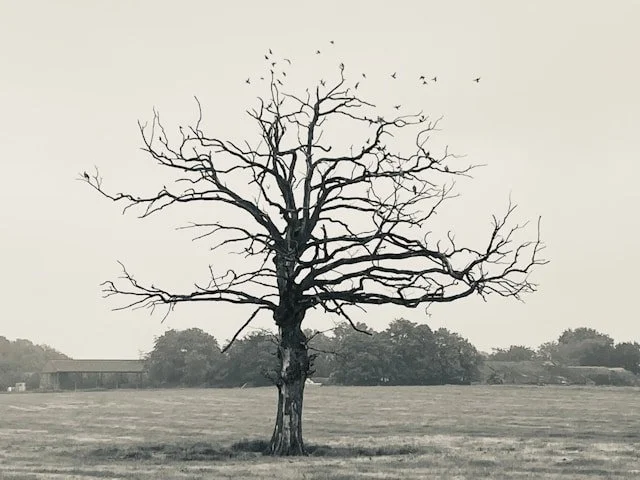
There’s a tree outside our bedroom window that provides beautiful shade in the summer. A while back I noticed the leaves were dying—brown, brittle, hanging lifelessly from the branches. So I did what most of us do when something looks unhealthy: I trimmed the visible problems.
I cut off dead branches. Then more branches. I fertilized. I watered. Nothing worked.
I was like the tree’s hairstylist—trimming split ends—when what it really needed was a heart surgeon.
One day I stepped near the trunk and my foot sank nearly a foot into the ground. Shock. The roots were rotten. Some disease or insect had eaten away what no one could see.
I didn’t have a branch problem. I had a root problem. And I couldn’t fix the branch problem until I understood what was happening beneath the surface.
That’s true for trees. It’s even more true for us.
The Gap We All Feel
Let me ask you something. Is there something you do that you hate? Or something you don’t do that you know you should? Is there a gap between who you wish you were and who you actually are? Maybe it’s anger. Anxiety. Porn. People-pleasing. Conflict avoidance. Procrastination. Emotional distance. Stoicism. Control.
For years, I resonated with the Apostle Paul’s words in Epistle to the Romans 7:15, “For what I want to do I do not do, but what I hate I do.” That verse can either lead us toward hope—or toward resignation.
Many of us quietly settle:
“That’s just who I am.”
We focus on trimming branches—behavior modification, sin management, trying harder. And while behavior matters, it doesn’t go far enough.
Here’s a core truth: What’s seen won’t change until what’s unseen does.
The Thing Under the Thing
The Bible calls the unseen root system of our lives the heart. Solomon says, “Above all else, guard your heart, for everything you do flows from it” (Prov. 4:23)
Jesus makes this unmistakably clear in Gospel of Mark 7. The religious leaders were obsessed with externals—washing rituals, rule-keeping, image management. Jesus confronted them and said the real problem isn’t what’s outside of you.
It’s what comes from within. Our motives, beliefs, habitual responses, values, fears, and longings—all of it lives in the heart. And all behavior is motivated.
The thing under the thing drives everything.
Two Foundational Truths
There are two realities that changed how I understand myself and others:
The past lives in the present.
All behavior is motivated.
Your heart was shaped in the classroom of your family of origin.
Every one of us had legitimate needs growing up:
To be seen
To be delighted in
To feel safe
To be known
To be loved
Some of us experienced obvious trauma. Others, like me, grew up in relatively calm homes.
But every family is made up of broken people. No one’s legitimate needs were perfectly met.
And unmet needs produce pain.
Here’s an overly simplistic formula:
Pain → Strategies to minimize pain → Unconscious adult patterns
We all experience pain. And we don’t like pain. So we develop strategies to survive it.
Anger.
Achievement.
Perfectionism.
Humor.
Busyness.
Control.
Emotional shutdown.
People-pleasing.
Hyper-independence.
As children, those strategies protected us. As adults, they often imprison us.
Most of our strategies fall into one of two forms of pride:
Self-protection
Self-promotion
They worked when we were eight. They don’t work at fifty-eight.
My Story
I grew up in a peaceful home. No abuse. No violence. My parents were good people.
But my mom had MS and was bedridden by the time I was 13. I was an only child—my brother died at birth. My dad was kind but emotionally distant and deeply introverted.
Here’s the simple truth: I was alone. I don’t remember being told “I love you.” I don’t remember hugs. I never had a birthday party. There was no dramatic trauma. Just emotional absence.
What was my strategy? I went stoic. I didn’t feel. If feeling hurts, shut it down. Be strong. Be independent. Move on.
That strategy shaped my adulthood. It affected my marriage. My parenting. And most deeply, my relationship with God. I knew in my head that God loved me. But it didn’t reach my heart. Jesus says, “As the Father has loved me, so have I loved you. Now remain in my love” (John 15:9).
I followed Jesus for decades—but I didn’t know how to remain in that love. I carried burdens alone. My fierce independence limited my intimacy with God.
That’s the thing under the thing.
Story Work
But understanding your story doesn’t heal you, it just reveals you. It exposes the human strategies and false beliefs that shaped your heart. Then you bring those to God—the Source of change.
Some questions that might help:
What disappointed you as a child?
Where did you feel unseen or unsafe?
What did you long for that wasn’t there?
How did you survive?
What did you come to believe about yourself? About God?
That’s the story that shaped your heart.
Jeremiah 17:9 says, “The heart is deceitful above all things…” An unexamined heart is dangerous to follow. Left alone, our hearts operate from pain and human strategies.
But a heart open to God—inviting His healing, His truth, His presence—can be transformed.
God doesn’t just trim branches.
He heals roots.
The Invitation
It’s work. Reading. Journaling. Counseling. Telling your story to safe people. Sitting with God in places you’ve avoided.
It’s never too late. I waited until my mid-sixties to do this work deeply.
If you want to change what comes out of your life—your words, your reactions, your leadership, your relationships—you have to allow God to change what’s inside.
Because the thing under the thing drives everything. What’s seen won’t change until what’s unseen does.
And Jesus longs to bring freedom—not just to your behavior—but to your heart.
You may also appreciate:
Photo by Ron Szalata on Unsplash