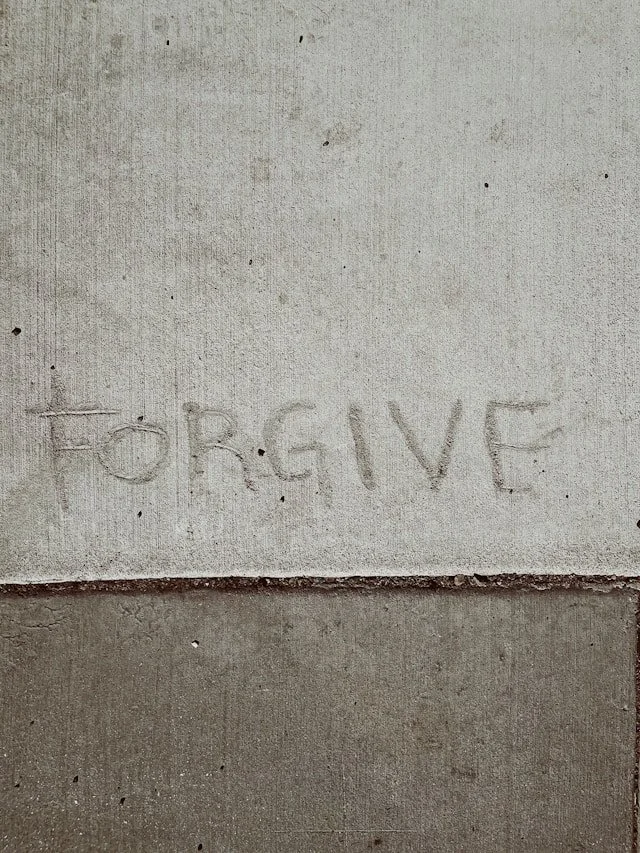
“Why do I have to keep forgiving them?” It’s a question I’ve heard many times as a pastor, said in different ways and sometimes meaning different things.
It can be said with weariness and hurt, or anger and bitterness, or confusion and longing.
It can mean, “It hurts too much to keep forgiving them for repeated sins.”
It can mean, “Can’t I just overlook their sin against me?”
It can mean, “They hurt me so deeply they don’t deserve any more forgiveness.”
It can mean, “Why am I still hurting over a particular sin when I said I forgave them?”
“Why do I have to keep forgiving?”
What does the Bible have to say about each of these situations?
“It hurts too much to keep forgiving them for repeated sins.”
Why do we have to keep forgiving that person when they keep sinning against us in a similar fashion? First, let’s be clear that forgiveness and reconciliation are different. You cannot have reconciliation without forgiveness, but in addition to forgiveness, reconciliation requires repentance, a changed pattern of living, and the re-building of trust.
Think of reconciliation like a bridge. Forgiveness represents the footers of the structure on either side of the river. While forgiveness can happen without repentance, generally in the case of reconciliation, the offending party has repented. This helps anchor the footers of the bridge of reconciliation in a shared empathy and commitment that what was done to break down trust was wrong and will not be done again. The structure of the bridge is constructed by a changed pattern of living on behalf of the wrongdoer and the allowance for trust to be rebuilt by the victim.
When we conflate forgiveness with reconciliation, we misunderstand what is being asked in forgiveness. We can forgive without being reconciled, meaning the footers can exist without the bridge. In fact, just as the construction of footers precedes the building of the bridge, forgiveness likewise precedes reconciliation.
Forgiveness is releasing the wrongdoer from what they owe you thereby opening the door for trust to be rebuilt. Forgiveness always hurts because it always costs us something dear. We must fully release what is owed us to God. And in the case that the wrongdoer is either unwilling or unable to change, forgiveness for ongoing harm can create even deeper wounds. Such real-time wounds might be an indication that construction on the bridge of reconciliation needs to be halted. Perhaps a protective boundary needs to be put in place, or a tie needs to be cut; be brave in seeking the counsel of a professional. Or we may need to allow more time for the offending party to prove trustworthiness through a transparent and tangible changed pattern of living.
So, yes, forgiveness hurts. If your heart is feeling particularly overwhelmed it may be because you are also trying to reconcile, when God is really asking you to first forgive.
“Can’t I just overlook their sin against me?”
Yes, you may certainly overlook an offense committed against you. We are told that it is to our “glory to overlook an offense” (Prov. 19:11). And that the one who “covers an offense seeks love” (Prov. 17:9). Peter tells us that as our hearts overflow with the love of Christ, that “love covers a multitude of sin” (1 Pet. 4:8).
We ought to be careful about our motivation to overlook and cover an offense, though. To truly overlook an offense, we must forgive the individual and not hold it against them or hinder our relationship. In addition, we must determine that covering over the offense is in the offender’s best interest. In other words, we might be able to truly overlook the offense, but determine that to love the individual well is to lovingly confront them. In short, many times we want to cover over an offense not because of love, but because of our fear.
“They hurt me so deeply they don’t deserve any more forgiveness.”
You are correct, and none of us deserve forgiveness. The world tries to navigate forgiveness by minimizing the sin and shrinking the harm. However, even the smallest sin is egregious if we had the ability to view it as God does. Paul informs us in Romans 6:23 that “the wages of sin is death.” There is no sin that does not deserve eternal damnation. There is no sin that does not exile us from Eden.
The answer is found not in denying, excusing, or minimizing the sin committed against us, but in discovering the deep well of God’s forgiveness for us. Jesus explains it this way in the Parable of the Unforgiving Servant:
“Therefore the kingdom of heaven may be compared to a king who wished to settle accounts with his servants. When he began to settle, one was brought to him who owed him ten thousand talents. And since he could not pay, his master ordered him to be sold, with his wife and children and all that he had, and payment to be made. So the servant[i] fell on his knees, imploring him, ‘Have patience with me, and I will pay you everything.’ And out of pity for him, the master of that servant released him and forgave him the debt. But when that same servant went out, he found one of his fellow servants who owed him a hundred denarii, and seizing him, he began to choke him, saying, ‘Pay what you owe.’ So his fellow servant fell down and pleaded with him, ‘Have patience with me, and I will pay you.’ He refused and went and put him in prison until he should pay the debt. When his fellow servants saw what had taken place, they were greatly distressed, and they went and reported to their master all that had taken place. Then his master summoned him and said to him, ‘You wicked servant! I forgave you all that debt because you pleaded with me. And should not you have had mercy on your fellow servant, as I had mercy on you?’ And in anger his master delivered him to the jailers,[k] until he should pay all his debt. So also my heavenly Father will do to every one of you, if you do not forgive your brother from your heart.” Matt. 18:23-35
One of the details I love in this account is that the second servant owes the wicked servant one hundred denarii which is no small amount. It is equivalent to four months wages for the common laborer or over $10,000 in today’s terms. Releasing someone from a $10,000 loan is a big deal. Jesus doesn’t diminish the harm done to us and the cost of forgiving that debt.
How then, can we forgive? Only when we consider how much God our Father has forgiven us. The king represents God in this dramatic illustration. Ten thousand talents which is roughly $7 billion today is an impossible debt to repay. Even if you had the good fortune of earning a six figure salary, it would take you 1,000 lifetimes to pay it off. Jesus is not exaggerating for effect here. The cost of our forgiveness is the death of the perfect and holy Son of God. Christ died for us that we might live with God. And this gift costs us nothing. Paul concludes Romans 6:23, “For the wages of sin is death, but the free gift of God is eternal life in Christ Jesus our Lord.”
We don’t forgive because sins done against us are manageable or diminished, but because we have experienced the extravagant mercy and forgiveness of Jesus Christ.
This is a timely word. In Seculosity, David Zahl points out that our secular age has not put righteousness to the side. In fact, there are many ways in which our contemporary age has brought to the fore a seemingly infinite way in which to gauge our righteousness. Consider the question of how to ethically purchase a t-shirt, buy ingredients for a salad, or what songs your church ought to sing (and omit). The complexities of the modern world (and the proliferation of knowledge) have further complicated our forgiveness. How do we forgive when we believe our co-worker didn’t just speak rudely to us, but that there was underlying racism or sexism? The answers are found in Jesus’ words. The offender will never likely fully understand the depth of their sin. They do not need to for it to be covered by the unfathomably rich mercy given to us in Christ.
“Why am I still hurting over a particular sin when I said I forgave them?”
We are told to “forgive and forget.” That’s what God does, after all, isn’t it? But this is not biblical. While God, in his mercy, has removed our transgressions “as far as the east is from the west,” (Ps. 103:12), this is not to pretend as though God loses omniscience when it comes to our sin. God does not forget our sin, but rather he chooses not to remember it. He treats us as though we have not sinned and are as righteous as Christ. The ascended Son of God still bears the scars of the cross in heaven. They are healed, yet they remain.
Neither are we expected to forget sins committed against us. To makes excuses or pretend as though the sin did not happen is folly. When serious sins are committed against us, we oftentimes don’t fully comprehend the depth of the harm that has been done to us. It is not unusual to forgive someone only to realize later that more forgiveness is required. Forgiveness is both a decision and a process. For instance, if someone gossips against you, you might initially realize your need to forgive that person for the way they have misrepresented you, and then later recognize that you need to forgive that person a second time for the way in which that misrepresentation has negatively impacted others’ view of you. Later, you may need to forgive the one who has gossiped against you for the way in which they have harmed your relationships. It is appropriate to feel the sting of the sin against you in a fresh way as each layer of impact is revealed.
It also might take years to heal from the trauma, and even when we are healed, we may still (like Christ) bear the scars of others’ sins against us. To bear these scars doesn’t necessarily mean that you haven’t forgiven the other person.
“Why do I have to keep forgiving?”
It is a difficult question, but one that the Bible graciously answers for us. To forgive is to release our control of the one we are forgiving into the hands of our just and merciful Judge for perfect vindication. There are consequences for a wrongdoer’s sin but it is neither our job to decide what those consequences are nor it is our job to carry them out. They will reap consequences whether we see it or not. To forgive is to trust our Healer that he will make all things right and will salve the wounds that have been inflicted on us. To not forgive means we allow ourselves to be hurt over and over again, once by the initial offense, and every time thereafter when we continue to hold on to it.
It is a good thing that the One we turn to when we navigate the layers of forgiveness has forgiven us and paid the cost to repair the ways in which we have wounded him.
Thanks be to God for his inexhaustible forgiveness!
You May Also Appreciate:
Photo by Christopher Stites on Unsplash